

Quick answer
Entry to Dubai's public desert areas costs 0 AED, and the desert itself is accessible 00:00–23:59 every day of the week; only organised tour packages carry a separate price. The practical constraint is heat rather than gates. Most visitors aim for the 15:30–16:30 arrival window, which skirts the worst midday temperatures and lands them in the dunes for sunset.
The sand that visitors photograph outside Dubai is not a static landscape. The dune ridges of the Dubai Desert Conservation Reserve and the Al Marmoom area shift measurably each season under the shamal winds, which is why the same track can look different from one winter to the next. Nothing is ticketed at the sand's edge. The address given for the area is simply Dubai Desert, Dubai, United Arab Emirates, and the land is open around the clock. What visitors actually buy is transport, equipment, guides and a camp — not entry. That distinction matters when comparing dubai desert safari activities across operators. Because the desert has no turnstile, no closing bell and no queue, the variables that shape the day are logistical rather than administrative: which stretch of dunes a company holds permits for, whether the camp sits inside the conservation reserve or on unprotected land, and how many vehicles share the same ridge at the same hour. Quad biking, sandboarding, camel rides, falconry displays and Bedouin-style camps recur across almost every itinerary, but the setting they occur in varies considerably. Reserve-based operations run smaller convoys under Dubai Municipality conservation rules; open-desert operators run larger ones. Neither is inherently better, though the quieter option suits photographers and families with young children. Season is the second variable. August sits at the peak of the Gulf summer, and afternoon temperatures in the interior routinely exceed anything comfortable for sustained outdoor movement, which is why late-day departures dominate the schedule. From roughly November through March, the same dunes support morning departures and overnight camping without difficulty. Anyone building a Dubai desert tour into a wider itinerary of Dubai landmarks should treat the season as a scheduling constraint rather than a preference. The practical use of all this is comparison. Read any offer against three questions: where in the desert it operates, how large its group is, and what time it collects you. Those three answers explain most price differences between otherwise identical listings. Verified details on protected areas and permitted operators are published by Dubai's official tourism authority at visitdubai.com, and it is worth cross-checking a company's stated location against that source. Approached this way, an evening among the dunes of the Dubai desert safari activities landscape becomes a considered choice rather than a booking made on the strength of a photograph.
“The desert has no turnstile, no closing bell and no queue — what visitors buy is transport, guides and a camp, not entry.”
A Breakdown of the Best Dubai Desert Safari Activities
Explore the primary recreational zones and structured activities spread across the Dubai Desert conservation areas and red dune fields. These activities blend motorsport thrills with traditional Bedouin cultural demonstrations.
Al Lahbab Dunes
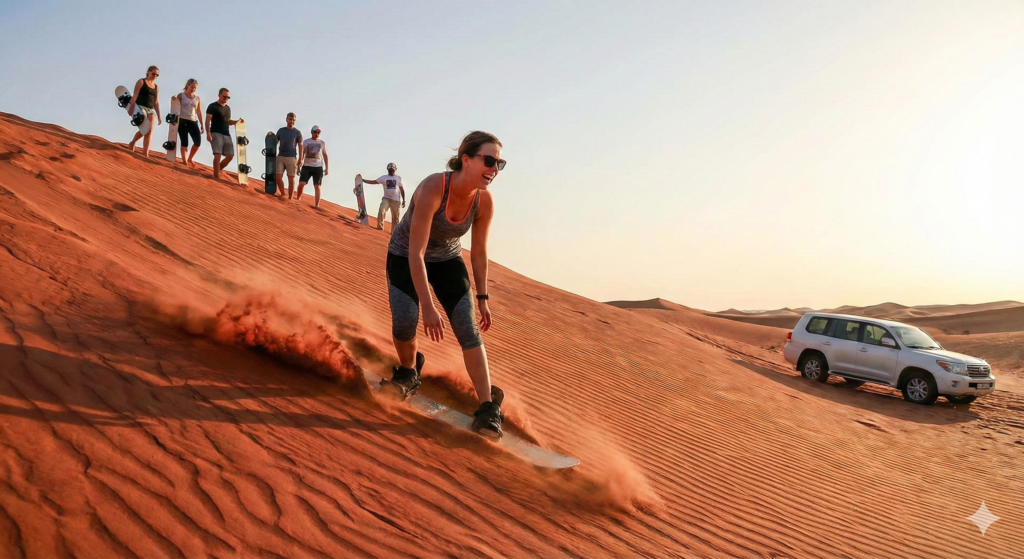
These high red dunes serve as the primary zone for dune bashing, where professional drivers navigate steep slopes in 4x4 vehicles. The terrain provides the steep angles required for sandboarding down the slip faces.
Walk away from parked vehicles to find clean, trackless sand ridges.
Quad Biking Arena
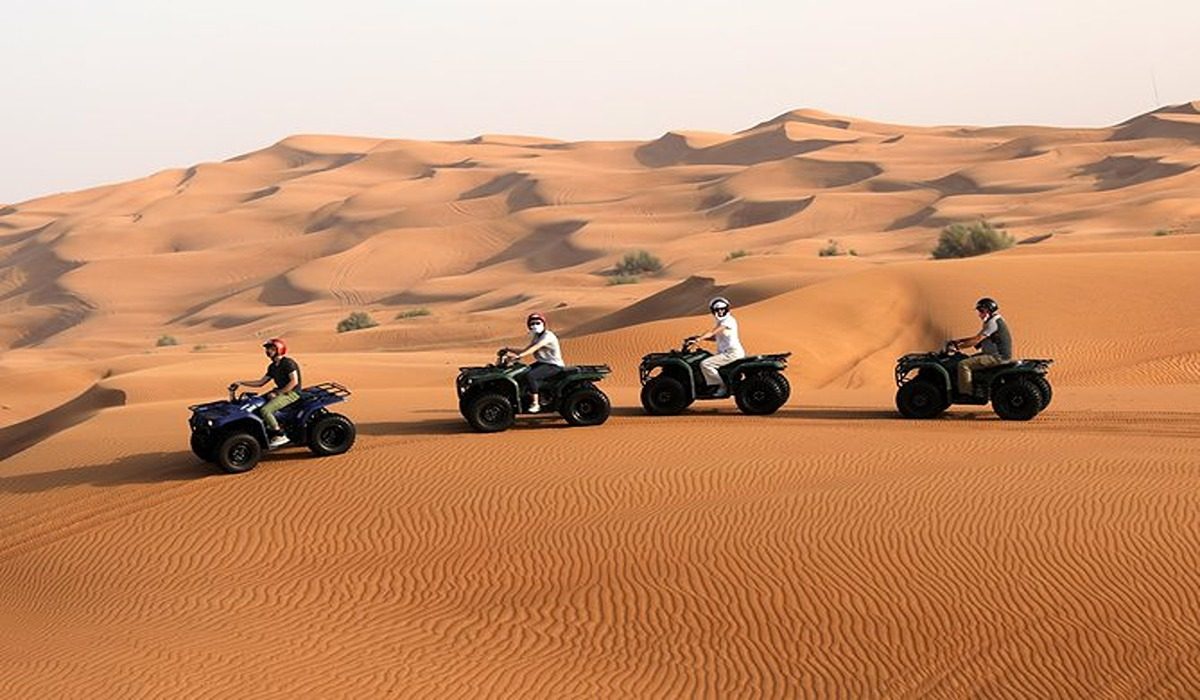
Dedicated fenced tracks and open-desert perimeters allow visitors to pilot four-wheeled all-terrain vehicles across the sand. Safety marshals monitor the boundaries to guide riders through the undulating terrain.
Look for the larger engine sizes for better traction on steep inclines.
Al Khayma Camp Stage
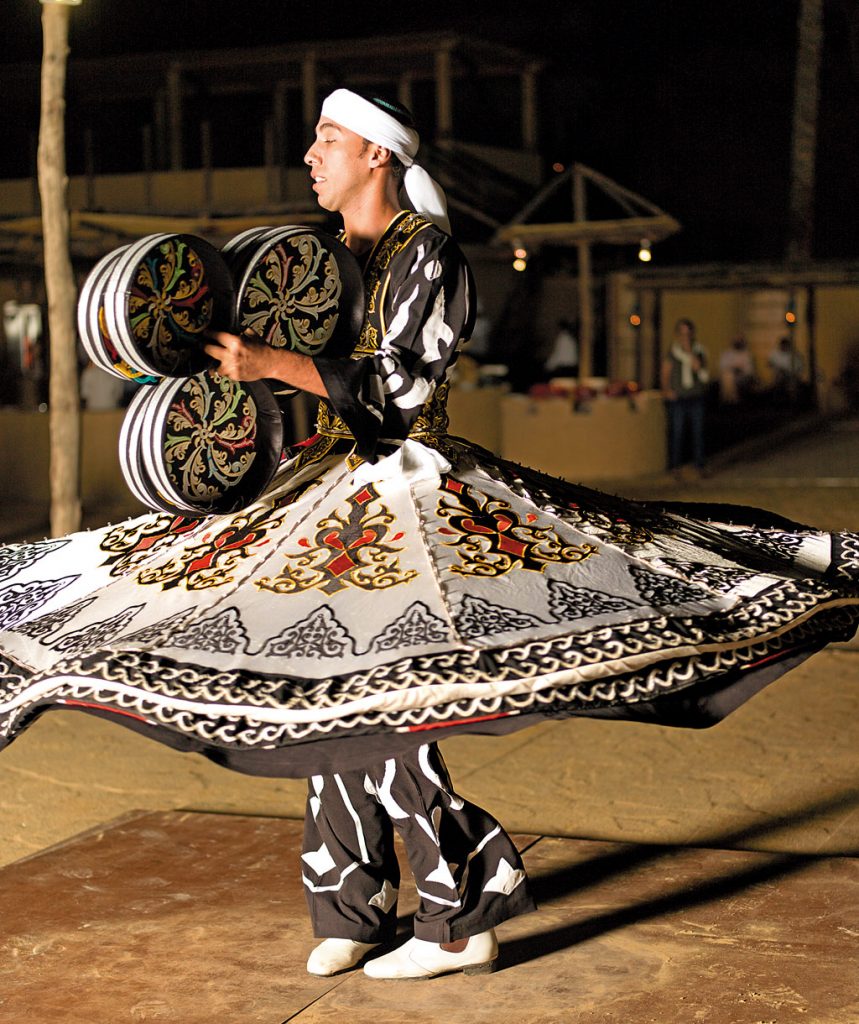
Located at the center of the desert camp, this carpeted performance area hosts traditional Tanoura folk dances and fire shows after dusk. Visitors sit on low cushions arranged around the stage to watch the performances.
Sit near the carpet edge to see the spinning dancers clearly.
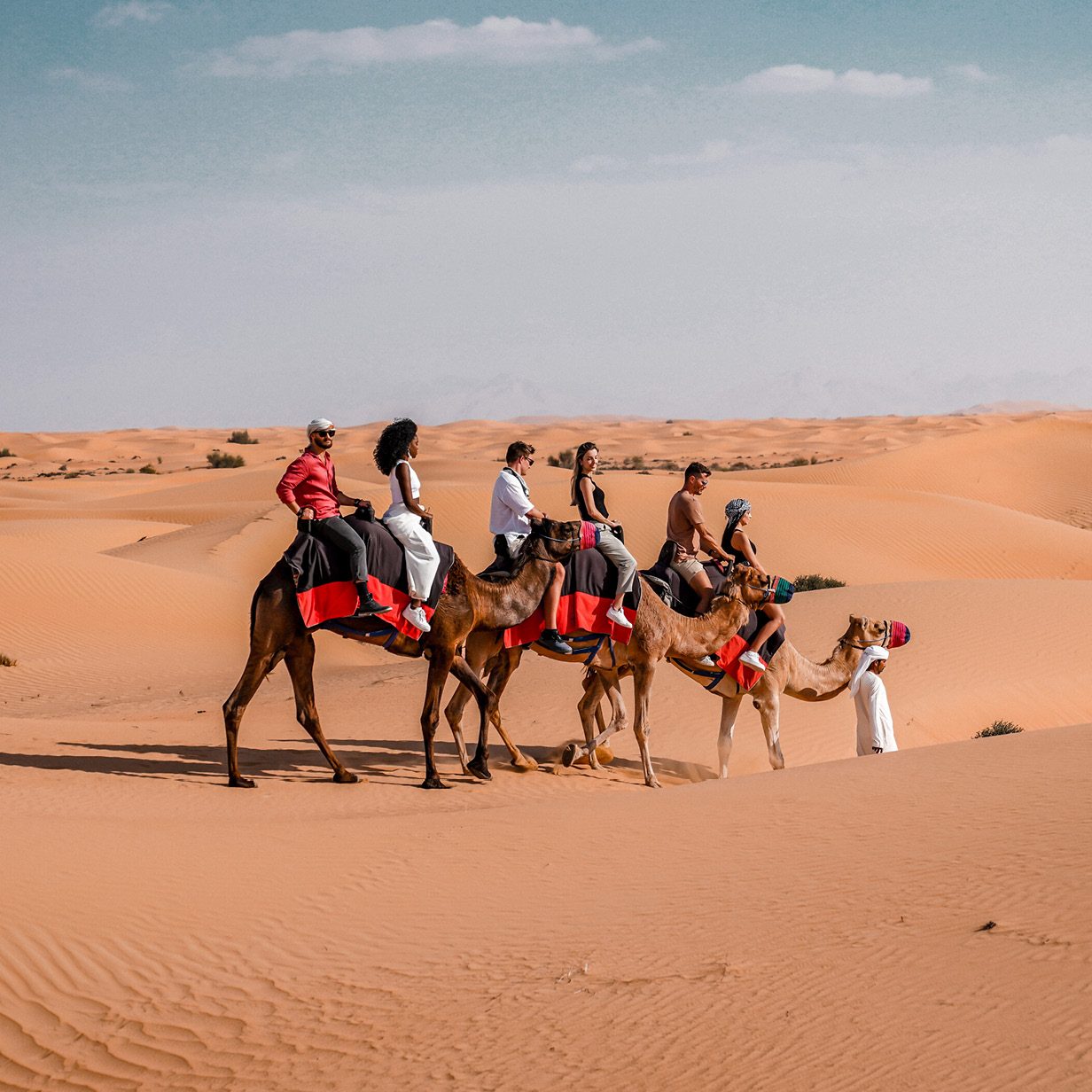
Camel Trekking Tracks
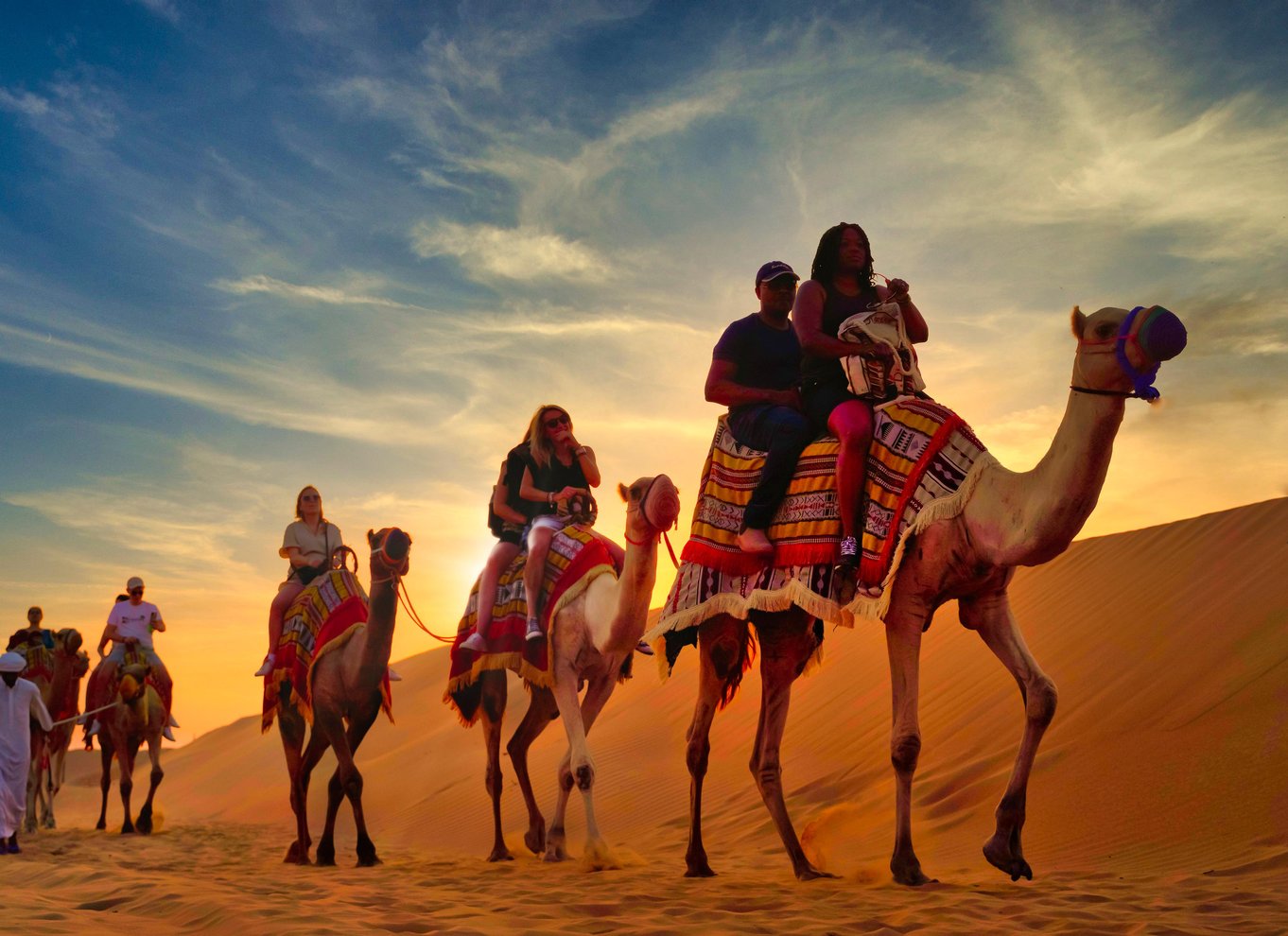
Located on the outskirts of the desert camps, these designated pathways offer short camel rides led by local handlers. The slow-paced journey provides a vantage point to view the surrounding dunes at a traditional pace.
Watch the camels rise back legs first from the mounting platform.
Chronological Flow of Your Dubai Desert Safari Activities
This timeline suits first-time visitors booking a standard evening safari with a quad bike add-on, running roughly six hours door to door. Pickup lands inside the 15:30–16:30 arrival window, and most groups are back at their hotel by 21:30.
Hotel pickup begins
A 4x4 collects you from your lobby and may make two or three further stops to fill the vehicle. Allow 45 to 60 minutes of driving before the dunes, longer from Marina or Palm Jumeirah addresses.
Arrive at desert gateway
The convoy pauses at a roadside stop near Al Awir or Lahbab so drivers can deflate tyres. Expect 10 to 15 minutes here, and use the washroom now because facilities are limited until camp.
Dune bashing run
Roughly 20 to 30 minutes crossing the red dunes, with a short photo halt at a ridge. Sit in the middle row if you want the steadiest ride.
Quad biking and sandboarding
Quad circuits run on a marked track beside the camp, typically 20 or 30 minutes depending on what your operator arranged. Camel rides and sandboarding run in the same window, so queues form at whichever activity the group reaches first.
Sunset viewing
Drivers stop on a high dune for the sunset, which lasts around 20 minutes. Public desert areas carry no entrance fee, so this stop costs nothing beyond your tour.
Camp arrival and settling
Bedouin-style camp with henna, shisha and majlis seating. Claim a low table early if your group wants to sit together.
Buffet dinner and shows
Grilled meats and vegetarian dishes served alongside tanoura, belly dance and fire performances, spread across 90 minutes.
Return transfer
Vehicles depart in stages, so tell your driver early if you need the first run back. Drop-offs take 45 to 75 minutes.
Best Times of Day and Year for Dubai Desert Safari Activities
The best time for a Dubai desert safari is from November to March. Aim to arrive between 15:30 and 16:30 to avoid the midday heat and catch the sunset.
November to March
High visitor volume dailyMild, 15°C to 30°C daytime highs
This is the prime season for activities as temperatures drop. Evening safaris offer cooler desert breezes.
May to September
Very low visitor numbersScorching, exceeding 40°C daily
Extreme heat limits visits, though operators run morning and late night packages. Activities are compressed to avoid sun exposure.
Late afternoon
Peak daily crowds at camps—
This slot offers cooler temperatures and sunset views. Most camp programs run during this shift.
Early morning
Fewer crowds than evening camps—
Ideal for travelers focusing on morning adventure sports. Camps do not host evening shows during these early slots.
Verdict: Book a weekday afternoon safari from November to February, arriving between 15:30 and 16:30 for the best weather and sunset views.
Understanding the Costs of Dubai Desert Safari Activities
While public desert entry is 0 AED, experiencing desert safari activities requires booking a structured tour. Standard packages typically cost between 150 AED and 350 AED per person, with price variations based on inclusions and adventure add-ons.
How to spend less
- Book group packages to share the overall transport and vehicle rental costs.
- Opt for morning packages which are generally cheaper than evening dinner safaris.
- Reserve activities online in advance to secure promotional discounts and bundle rates.
A budget visit costs around 150 AED, while a comfortable experience with quad biking averages 350 AED to 500 AED.
Mistakes to Avoid During Dubai Desert Safari Activities
Most desert safari problems trace back to a few avoidable decisions made before the vehicle leaves the road. These are the errors that most often turn a smooth afternoon into an uncomfortable one.
Eating a large meal shortly before dune bashing
Keep food light in the hours before pickup and stick to water. Dune bashing involves sharp descents and lateral slides, and a full stomach is the main cause of motion sickness on the drive.
Sitting in the rear seats despite motion sickness
Ask for a front or middle seat when you book, since rear rows feel the most movement. Tell your driver early if you feel unwell — they can slow the pace or stop, and stepping out for a few minutes usually settles it.
Booking through unlicensed street or hotel-lobby touts
Use operators licensed by Dubai's Department of Economy and Tourism, and confirm the vehicle has functioning seatbelts and a roll cage. Check details on the official site: https://www.visitdubai.com/en/places-to-visit/desert-safari-dubai
Ignoring medical conditions before the dune drive
Back, neck, and heart conditions, recent surgery and pregnancy rule out dune bashing. Declare these when booking so the operator can seat you out of that segment rather than refusing you on arrival.
Assuming the desert stays warm after sunset
Temperatures drop sharply once the sun goes down, especially November to March. Bring a jacket or light layer even when the afternoon is hot.
Turning up without any booking arranged
Public desert areas are open 00:00–23:59 with 0 AED entry, but activities themselves run on pre-arranged tours. Confirm your booking in advance rather than expecting to join on the day.
How to Travel to the Dubai Desert Safari Location
The activity zones are located at Dubai Desert, Dubai, United Arab Emirates, about 50 kilometers southeast of the city center. The most common option is using operator-led transfers, though self-driving to designated desert meeting points via major highways is also available.
E66 (Al Ain Road) and E77 (Lahbab Road) to desert meeting point
Downtown Dubai via E66 to Lahbab Red Dunes
Line 11 from Centrepoint Metro Station to Awir, Masjid 1
Preparation Checklist for Your Dubai Desert Adventure
A short list of things to sort out before your desert safari, ordered from booking week to the moment your pickup arrives.
-
Confirm your safari booking in advance — Popular afternoon departures fill up, especially in cooler months.
-
Carry photo ID and passport copy — Operators often record identification details for desert permits and insurance.
-
Pack loose, breathable cotton or linen — Light long sleeves keep sun off while staying cool in dry heat.
-
Bring a light layer for evening — Desert temperatures drop noticeably once the sun goes down.
-
Wear closed shoes, not sandals — Sand gets hot, and closed shoes stay on during dune walks and quad riding.
-
Apply SPF 50 sunscreen before pickup — Reapply after two hours, covering ears, neck and the backs of hands.
-
Pack sunglasses and a scarf — Wind lifts fine sand, and glare off pale dunes is strong.
-
Take motion sickness tablets 30 minutes early — Tablets need time to work before you reach the dunes.
Check availability
FAQs about dubai desert safari activities
Everything you need to know about dubai desert safari activities